About the Art of Nicholas Stedman
Gouache: A Formative Medium
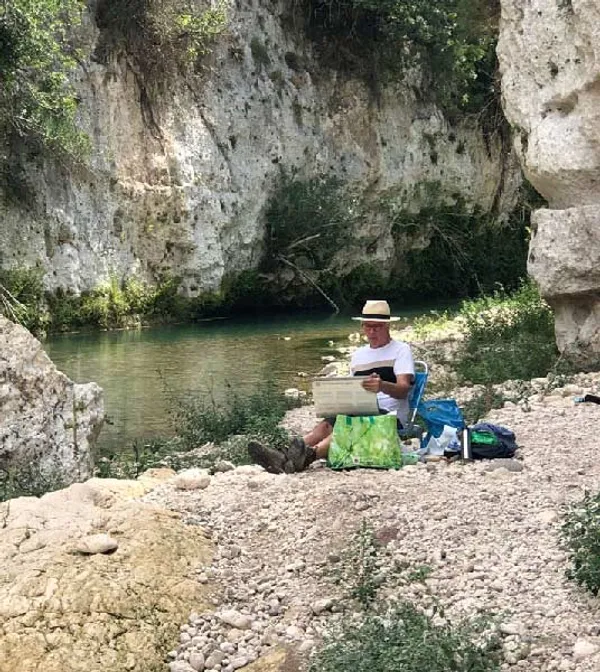
Nicholas Stedman has been a professional artist since 1979. His oil and acrylic compositions—often featuring single figures and groups in motion—have sold to collectors worldwide. For a broader look at his paintings of dancers and circus performers, one may visit his Instagram or his primary website.
While Stedman's earliest works utilized powder paints, his trajectory changed during his time at Christ’s Hospital. The Scottish artist Nell Todd observed that his natural approach was uniquely suited to gouache—a denser, more opaque relative of watercolor.
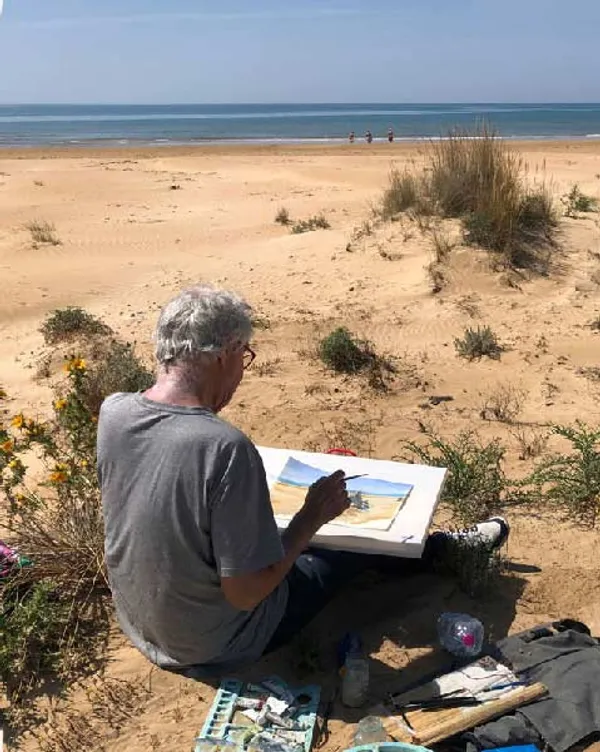
In the creative refuge of his school years, Stedman began painting studies of moths caught in mercury vapor traps. Throughout subsequent travels in India and his studies at Cambridge, gouache remained his constant companion. His work consistently seeks to capture the genius loci—the spirit of a place—through rigorous direct observation and plein-air painting.
Plein-Air Painting
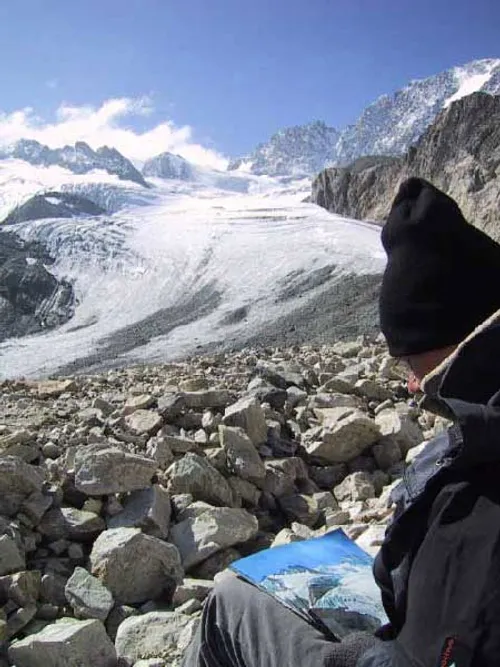
All the paintings featured on this website were created plein-air. While the tradition of working outdoors has existed for centuries, it was only in the 19th century that it gained full critical recognition. To paint outdoors is to confront the fleeting nature of the scene; the light shifts constantly as clouds gather and break.
True plein-air painting relied on two historical breakthroughs: the invention of metal paint tubes and the development of vivid pigments like cobalt blue. Claude Monet exemplified this potential by returning to the same subject repeatedly to capture specific moods under varying conditions. Stedman’s work follows this lineage, demonstrating how working directly from life leads to an extraordinary depth of perception.
The Creative Drive
In the modern era, photography often dominates how artists approach movement. Stedman utilizes photography for his figure work, acknowledging that the human body moves too fast for the eye to catch every nuance. However, this raises a vital question: what is the contemporary role of painting directly from nature?
Relatively few artists continue the tradition of painting exclusively outdoors. While many remain skeptical of working with gouache in the field, Stedman finds that painting from life offers an authenticity and a profound connection to reality that photography—and much of contemporary art—frequently overlooks.